Regulatory
Vigilance
8 Min.
What Is a Complaint in MedTech? Definition & Classification

Markus Pöttker
In post-market surveillance, few questions sound as simple and cause as much friction as this one:
What is a complaint, and what is not?
At first glance, this may seem like a purely definitional issue. In practice, though, it influences far more than terminology: it shapes how information is handled, how risks are assessed, and how feedback ultimately drives patient safety.
So why does this question keep resurfacing in medical device organizations, and why does it matter so much in practice?
Not all feedback is negative.
Manufacturers also receive positive signals, from users sharing successful outcomes to simple thank-you emails about products that work well in practice.
Yet most discussions still revolve around complaints. And that’s exactly where the classification question becomes critical.
Why Complaint Classification Matters
Let’s start at the very beginning: classification isn’t a downstream detail, it’s the starting point of the entire complaint handling process.
Complaint handling is part of the feedback process, and feedback is a critical input into risk management and product improvement. When teams don’t start from the same conceptual baseline, discussions drift. Decisions are made on different assumptions, and outcomes vary, even when everyone involved is acting in good faith.
This also matters from a compliance perspective, as incorrect classification can lead to challenges during audits.
Classification decisions are always based on how terms are defined within an organisation. If those definitions are unclear or interpreted differently, similar cases may be classified in different ways.
Put simply: different definitions lead to different results.
Feedback vs. Complaint: What the Standards Actually Say
ISO 13485:2016 is clear on one point: medical device manufacturers are required to establish and maintain a feedback process to systematically collect and monitor information on whether customer requirements are being met.
Within this feedback process, complaints are one source of information, but feedback is explicitly more than complaints.
Historically, many organizations have treated feedback and complaint handling as interchangeable. Over time, this has shaped systems, databases, and internal discussions in subtle but persistent ways.
As a result, teams often begin by debating whether something is a complaint, instead of first asking the more fundamental question:
How should this information be assessed and used?
Where Grey Zones in Complaint Classification Appear
In real-world post-market surveillance, classification rarely happens in clean categories.
For instance, grey zones frequently arise between:
incidents and complaints
complaints and vigilance cases
complaints and technical service cases
And typical discussion points include:
Is this an incident or a complaint?
Is it a complaint or a vigilance case?
Does the label even matter?
If this sounds familiar, you’re not alone: Teams can spend hours debating how a specific case should be classified. In our experience, these discussions are often lengthy, sometimes circular and frequently don’t change the actual outcome.
From a risk management perspective, the origin or label of the data is secondary. What matters is that all relevant information is assessed and fed into risk management!
What Happens When Complaint Classification Becomes an Operational Problem?
In reality, many classification challenges are not primarily regulatory problems, but operational ones: most manufacturers rely on software systems built around a complaint handling database. In these systems, regulatory reportability decisions (like FDA Medical Device Reports (MDRs)) are technically linked to a complaint record.
Before a report can be generated, the information must first exist in the system as a complaint.
At the same time, manufacturers receive information from many different sources, including:
customer feedback
scientific literature
registries
real-world evidence
And in many of these cases, no one has actually complained.
Nevertheless, the manufacturer is still required to assess whether the information is reportable.
Because alternative categories are often missing in the system, this information is frequently entered as a complaint, not because it fits the definition, but because the system requires it.
The Real Risk of Misclassification
Misclassification is an easy target for auditors and notified bodies: it can (and often does) lead to audit findings.
However, this is rarely the most critical risk.
Authorities, particularly the FDA, are far less concerned with the formal label than with the substance of the assessment. Their expectation is straightforward:
All information received by the manufacturer must be reviewed and evaluated.
The decisive question is whether the information constitutes a reportable event.
What matters is that:
the information was assessed
a decision on reportability was made
and that decision was documented
Whether the record was labelled “complaint” or not is secondary.
False Positives, False Negatives … or the Wrong Question?
Many internal discussions focus on optimisation strategies:
Should organizations accept more false positives and classify conservatively?
Or should they focus on avoiding false negatives and missing real complaints?
This framing assumes that complaint classification itself is the core problem, but in practice, it is worth questioning the starting point instead.
From Complaint Handling to Feedback Management
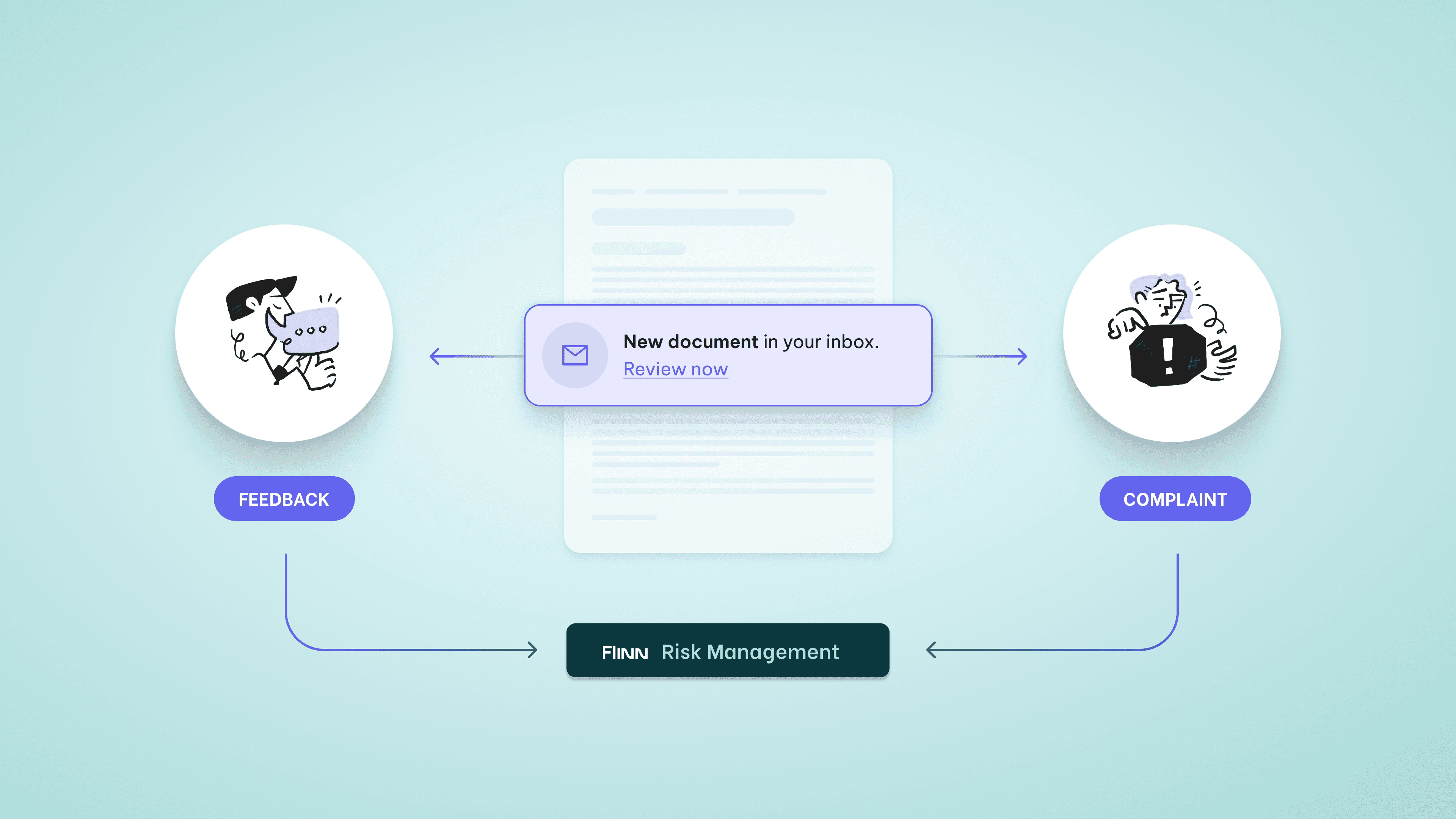
So, rather than treating complaint handling as the primary organising principle, a feedback-first approach offers a more robust foundation.
In a feedback management model:
all incoming information is first treated as feedback
the feedback is evaluated
it is then determined if the feedback constitutes a complaint
and a reportability decision is made
Crucially, something does not need to be a complaint in order to be reportable.
And all feedback (regardless of classification) feeds into risk management.
This shifts the focus away from labels and toward substance.
Putting It into Practice!
At the end of the day, endless debates about definitions rarely improve product safety.
What ultimately strengthens a manufacturer’s position, with auditors and authorities alike, is having systems in place that ensure:
all relevant information is captured
all information is analysed and evaluated
and all relevant data feeds into risk management
When this works as intended, classification debates fade into the background and patient safety takes center stage again.
And that’s exactly the mindset Flinn is built to support:
less friction around labels, more clarity around decisions, and better outcomes across post-market surveillance and risk management.
How Flinn and AI Support Consistent Classification
As the article shows, complaint classification is a complex topic that depends heavily on definitions, context, and consistency over time. This is exactly where Flinn applies AI in a deliberate and structured way.
Flinn’s Intake Agent supports manufacturers by standardising the first step of information intake and classification:
incoming information is automatically identified and assessed
the system distinguishes between general feedback, complaints, and potentially serious incidents
classification is performed based on the company’s own definitions and processes, not on generic rules
To achieve this, the AI is trained on the customer’s specific context. Rather than enforcing a one-size-fits-all logic, the system learns how the organisation itself defines and handles different types of feedback. This enables a level of consistency that is difficult to maintain manually, especially at scale.
Once the initial training phase is completed:
classification follows a stable and repeatable logic
decisions are applied consistently across large volumes of input
deviations caused by individual interpretation are reduced
At the same time, human judgement remains essential. Whenever the system identifies uncertainty:
the case is escalated to a human expert
the final decision stays with the manufacturer
Given how central classification is to post-market surveillance and risk management, this combination of trained AI and targeted human oversight helps move organisations away from ad-hoc decisions and towards a more robust, feedback-driven process.
Want to explore how structured feedback management and AI-supported classification can work in your organisation? Contact us – we’d be happy to show you how.